Dissecting Artificial Intelligence: A Layman’s Deep Dive into the World of AI

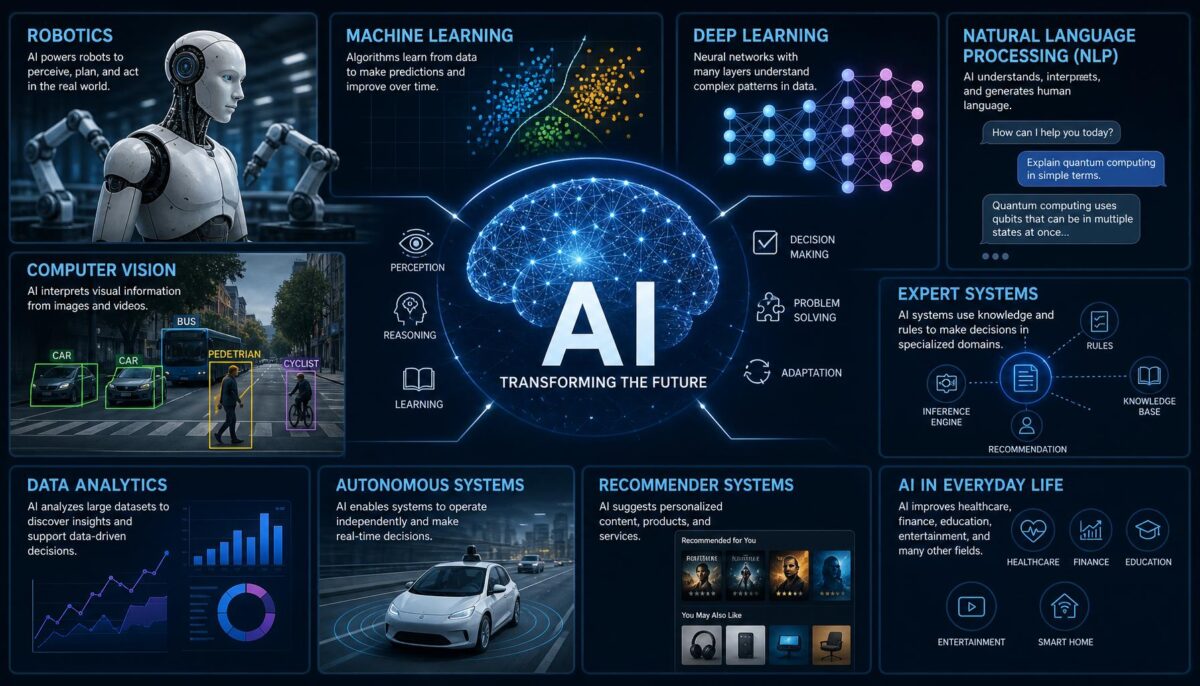
Artificial Intelligence or AI is a field of computer science that deals with the creation and development of machines that are capable of exhibiting human-like intelligence, learn from their experiences, understand information, make decisions, understand human languages, and perform tasks that normally require human intelligence.

AI can be broken down into two main types:

1. Narrow AI: This is artificial intelligence systems that are designed to do a narrow task such as voice recognition. For instance, Apple’s Siri and Amazon’s Alexa are examples of Narrow AI.

2. General AI: This is the type of AI that we generally associate with sci-fi movies. General AI refers to machines that are capable of performing any intellectual task that a human being can do.

Intricacies of AI:

1. Machine Learning: Machine Learning is a core part of AI. It involves teaching machines how to learn from data inputs and use that learning to make decisions or predictions.

2. Neural Networks: They try to simulate the workings of the human brain to help AI systems learn, understand and make decisions.

3. Natural Language Processing (NLP): This is the ability of an AI to understand, generate, and respond in human language. It’s what Siri, Alexa, and Google Assistant use to understand and respond to user commands.

4. Deep Learning: A subtype of machine learning where artificial neural networks are built in layers to create an “artificial brain” that can make decisions and learn from data.

5. Robotics: AI also involves building machines (robots) that can interact with the physical environment and perform specific tasks.

Overall, the objective of AI is to make machines smarter and capable of doing things that normally require human intelligence. To a layman, you could think of AI as a smart assistant that can understand your commands, learn from your actions, and perform tasks that make your life easier, from recommending a Netflix show based on what you’ve liked in the past, to self-driving cars that can navigate traffic on its own.

Untangling Quantum Computing: A Non-Scientist’s Journey into the Quantum Realm

Quantum computing is a rapidly evolving field of technology that seeks to exploit the strange and complex laws of quantum physics to create computers that could be millions, or even billions, of times more powerful than the ones we use today. The concept might sound like it’s science fiction, but it’s a reality: companies like Google, IBM, and Microsoft are already investing heavily in quantum computing research and development.

At the most basic level, normal computers use bits to process information, which can either be in a state of 0 or 1. Quantum computers, however, use quantum bits or ‘qubits’ that can exist in multiple states simultaneously thanks to a property called superposition. This allows quantum computers to process a higher amount of data compared to classical computers. Furthermore, quantum bits can be entangled through a property known as entanglement. If two qubits become entangled, the state of one will immediately affect the other, no matter how far apart they are. This is a genuinely mind-boggling concept with potentially world-changing implications.

Quantum computing is expected to revolutionize many fields. For instance, in medicine, it could help design effective drugs or analyze genetic material; in artificial intelligence, it could fast-track computing speeds; in the cases of climate modeling and energy resources, complex simulations could be made that are far beyond the capacity of present-day machines.

However, the technology is in its nascent stage and still faces many hurdles. When qubits are used for calculations, they are prone to errors due to environmental conditions, a challenge known as ‘quantum decoherence’. Furthermore, storing information in a quantum state is challenging as it requires very specific conditions such as extremely cold temperatures.

Quantum computing could also create new threats. Notably, many worry about its potential to crack most of the encryption that keeps our digital information safe.

In conclusion, quantum computing promises to bring about enormous changes in various fields. However, like many technological advancements, its influence on society will depend not only on the development of technology itself, but also on human decisions surrounding its usage. As we move towards a quantum future, it becomes imperative to involve a wide range of stakeholders in discussing its ethical implications and collectively decide how this powerful technology should be governed.

Decoding Artificial Intelligence: A Layman’s Exploration into the World of AI

Artificial intelligence (AI) is paving its way in almost every sphere of today’s digital world. From Google’s search algorithms to Amazon’s shopping suggestions, artificial intelligence’s influence is omnipresent and growing swiftly. For technology enthusiasts who are just beginning their journey into this realm, here is an early exploration into this fascinating field.

Artificial Intelligence is essentially a branch of computer science that aims to create intelligent machines. But what does that mean exactly? ‘Intelligent’ machines are machines that can mimic human behavior – they can understand, react, learn, and process information.

Two types of AI:

AI can be split into two broad types: Narrow AI and General AI. Narrow AI is designed to perform a narrow task such as only facial recognition or only voice commands and is the AI we see everywhere today. General AI, on the other hand, are the systems that possess the ability to perform any intellectual task that a human being can do.

Machine Learning (ML) is one of the most significant aspects of AI. It involves teaching machines to learn and make decisions like humans. This usually involves feeding them a lot of data and letting the machine ‘learn’ on its own. For example, if we input thousands of cat pictures into a machine learning algorithm, it will ‘learn’ to recognize a cat.

For example, the predictive text feature on your smartphone, which anticipates what you’re going to type next, uses ML to understand your typing patterns and habits.

The subset of Machine Learning is Deep Learning. It mimics the working of the human brain in processing data for use in decision making. It is used for complex tasks like language translation, visual perception etc.

Artificial Intelligence is once reserved for science fiction narratives is now a part of our everyday lives, influencing how we live, work, and entertain ourselves.

Pros and Cons of AI:

While AI is capable of streamlining processes, augmenting our abilities, and offering new services, there are also concerns regarding job security (with automation taking over certain industries) and privacy.

AI is powerful and can change the world in unimaginable ways. It’s also something we need to handle with care, considering the ethical implications and potential societal impact.

The Future of AI:

The future of AI holds limitless possibilities. With advancements like self-driving cars and AI-assisted medical diagnoses, we’re already catching a glimpse of this future. However, the full potential of AI is yet to be realized and promises to be an exciting journey.

In conclusion, Artificial Intelligence is a vast field with immense potential. For tech enthusiasts venturing into this field, it can be a fascinating area of study and exploration, with the power not only to propel one’s professional growth but to shape the future of our world.

Unraveling Quantum Computing: A Beginner’s Guide in the World of Bits and Qubits

What is Quantum Computing?

Quantum computing is a branch of computing that works on the principles of quantum mechanics. Quantum mechanics is a field in physics that studies the behavior of particles at the nanoscopic level. Unlike classical computers that use bits (0s and 1s) to process information, quantum computers use quantum bits or qubits. A qubit can be both 0 and 1 at the same time, due to a property known as superposition.

Quantum Computing Principles

The power of quantum computing lies in two fundamental principles of quantum mechanics: superposition and entanglement.

Superposition: As mentioned earlier, a quantum computer’s qubit can represent multiple states simultaneously. This contrasts to classical bits that can only be in a state of 0 or 1. Superposition allows quantum computers to process a vast number of computations at once.

Entanglement: When qubits become entangled, the state of one qubit is directly related to the state of another, no matter how far apart they are. Entanglement can improve computing speed and capacity exponentially.

Potential Impacts

Because of these unique properties, quantum computing could potentially revolutionize numerous fields:

Cryptography: Current encryption methods could be broken down by quantum computers, leading to the need for quantum encryption strategies.

Drug Discovery: Quantum computing could dramatically speed up the process of drug discovery. It could analyze and construct potential drug molecules far quicker than traditional methods.

Machine learning: Quantum algorithms could potentially handle and process larger datasets than classical computers, taking machine learning to a new level.

Climate Modeling: Quantum computing could improve predictions about earth’s climate by processing complex models more efficiently.

Despite all the potential, quantum computing is still in its infancy, with many challenges to overcome. Building and maintaining quantum computers are incredibly complex and require extremely cold environments. Additionally, creating algorithms that can make full use of a quantum computer’s capability is still a considerable challenge.

In short, quantum computing leverages the principles of quantum mechanics to create computers with unprecedented power and potential. While we are still in the early stages, the impacts of quantum computing are predicted to be far-reaching and revolutionary.

Demystifying Artificial Intelligence: A Comprehensive Handbook for Newbies

Artificial Intelligence, popularly known as AI, is the science of making machines capable of performing tasks that would typically require human intelligence. AI is often perceived as a complex field, but in reality, once we dive into it, we find ourselves intrigued by its exciting possibilities.

AI Usage

AI has a broad spectrum of uses and is slowly changing the dynamics of several industries. For instance, in healthcare, AI is used to predict diseases or analyze medical images. In finance, it’s used to predict market trends and in automobiles, it’s used to facilitate self-driving cars.

Moreover, AI is the backbone of personal voice assistants like Siri, Alexa, and Google Assistant, which we often use in our daily lives. AI is also used in recommendation systems which platforms like Netflix and Amazon utilise to personalize the user experience.

Advancement in AI

AI technology has been advancing rapidly. It allows machines not only to perform complex tasks efficiently but to learn from experience. This is known as Machine Learning. Another advancement is Deep Learning, a subset of Machine Learning, which makes sense of data with a logical structure similar to human neural networks.

Popular AI tools

There are several tools available that make AI accessible to both study and develop on. These include frameworks like TensorFlow, Keras, and PyTorch which help in the development of AI models. Programming languages like Python and R play a significant role in AI development due to their simplicity and extensive support for statistical and mathematical operations.

Future Prospects

As we move towards a more digitized world, the role of AI is becoming more prominent. AI has the potential to automate many manual tasks, making work more efficient and accurate. Moreover, future AI is anticipated to open new avenues in predictive sciences, enabling us to have a better forecast in fields such as climatology and disease control.

AI in advanced robotics can help in areas like rescue operations, where human lives are at risk. Smart homes, where devices communicate with each other and increase efficiency and comfort, are another exciting application of AI we can expect in the future.

In summary, AI is neither complicated nor something to fear. Instead, it’s an area full of potential to make our lives easier and more efficient. It’s about learning from and understanding the world around us and using that knowledge to improve and automate different aspects of life. It’s a vast field with endless opportunities, and the future holds even more promises.

For beginners exploring AI, the potential and scope indeed seem to be intriguing. Your journey in understanding and applying AI will be enriched with continuous learning and fascination at every step. Happy exploring!

Decoding Social Media Marketing: The Ultimate Guide for Beginners

Social media marketing is no longer just a trendy hobby, it’s a powerful business tool. Let’s delve into the depths of this phenomenon to understand it better.

Firstly, social media campaigns involve much more than just posting about sales. They encompass branding, customer engagement, news updates, and many other facets. Successful campaigns often combine humor, news, promotions, and engagement opportunities to capture a wider audience.

The strategies vary across platforms. Facebook, Instagram, Twitter, LinkedIn, Snapchat, Pinterest, and even TikTok have unique practices for best results. The key is to understand the audience and tailor the message. Strategies can include influencer marketing, paid advertising, organic growth, User-Generated Content, and more.

Tools are an indispensable part of any campaign. Software like Hootsuite, Buffer, Canva, Sprinklr, Buzzsumo, Brandwatch, among others, offer means to manage, analyse, create, and distribute content. They automate tasks, provide analytic reports, help in interacting with followers, and track campaigns.

Trends in this field are mercurial – changing rapidly and often. Currently, stories (short-lived content), video content, Augmented Reality (AR), Virtual Reality (VR), Artificial Intelligence-powered tools, real-time interactivity (like polls or Q&As) are in vogue.

User behaviour also influences trends. The rise of mobile consumption has led to the popularity of vertical content. Catering to shorter attention spans, micro-influencers, bite-sized content, and faster response rates have become essential.

Another trend is the focus on personalised and authentic content as users are becoming more wary of blatant advertising. Social listening, that is tracking user conversations about a brand, and sentiment analysis are gaining popularity.

By understanding the mysteries of social media marketing, businesses can establish a strong and effective online presence. With the right blend of strategies, tools, and up-to-date knowledge of trends, they can attract, engage, and retain a wide audience, thereby driving growth and success.

Internet Marketing 101 for The Total NOOB

Many businesses leverage the power of the Internet to sell more than they ever thought possible. Internet marketing generates interest in your products a number of different ways. Read on for some great tips on improving your own internet marketing efforts.

Use the signature line in forums and email to promote your business. If you post in a forum, you can usually link to your site right in your signature, which will make it appear with every post you make. Include your link in every business email you send out. This promotes your website everywhere you go online. The increased number of backlinks also increases your search engine ranking. Something that catches the reader’s attention and makes them want to click the link is a great addition.

Study your competitors and choose the best of their sales and advertising tactics to enhance your own. Picture yourself as a customer on their site, and if you can see yourself wanting to buy, they are doing it right. Use the best ideas and fold it into your own strategy.

Email can be a good marketing tool. Grab your customers’ interest by creating newsletters that inform and intrigue them. Your subscribers want to feel like you’re sharing valuable information with them, not spam. Sending something to your customers on a regular basis ensures that you are kept in their minds, just be sure to not over-do it.

When you link to another page on your site, use your keywords in the anchor text. Keeping people on your site is one of the most important things that a website owner can do, and you should link them to other relevant posts you may have made in the past. Internal links are a free way to advertise to current customers and to help get you more hits from other advertising avenues.

Place a banner within your site that contains your logo or mission statement. This helps your website look more professional, and it shows your visitors who you are. Make it easy for customers to order products and services.

The aim of your online marketing strategy should be more Internet marketing. It is essential to set up ways to help your customers find your business, buy your product and then become loyal customers who return again and again.

You need to figure what content would attract your target market to your site. When you have identified your target audience, producing attractive content that will keep them coming back to your site will be easier.

Third-party security for transactions is a must if you’re any kind of volume business. There are various trusted services/ McAffee, VeriSign, etc. will safeguard the financial exposure of both vendor and customer. Online security is very important and it’s not free. However, it can help you avoid a myriad of problems, so do your research and make sure your financial transactions are protected.

Find other businesses that would be interested in your products, and offer them promotional discounts of product or service bundles. This strategy expands your market and benefits both you and your product partners. One common situation is internet booking agents, who have prearranged discounts for individuals who book their accommodations and transportation in a single transaction. It only works for businesses that have linked products versus having the same products.

Facebook and Twitter are important sites to use to stay in touch with customers and gain new ones. Avoid sending spam through social media sites and e-mail because it is annoying to potential customers and illegal in some states.

You could add some user polls alongside your specific content to get readers’ views and feedback. This will make your customers feel included in the business, and it will assure that your site will have plenty of content that they will find very appealing.

Use banner ads that stand out. Making your banner eye catching will draw more people to click it.

Learn how to use HTML tags. Tags are a great way to highlight your key content and also improve your search engine results. Search engine spiders will evaluate your website based on what these tags emphasize. It’s important, then, to emphasize the keywords that are most essential for your SEO.

Include excellent graphics on your website to showcase the products you are selling. A clear and crisp graphic of your product will be appreciated by your customers. You should implement specific sections that customers can use to send in their product pictures. For certain kinds of products, images that showcase what a person looked like “before” and what he looked like “after” using the product will work wonders.

Choosing a good niche is key to having a successful Internet based business. You cannot sell any baseball cards to a person that desires the vintage Star Wars toys. Niche marketing is one of the most important aspects of Internet market; it’s essentially the path that all other marketing techniques will travel down. So market accordingly unless you’re a baseball card and old Star Wars toy retailer; then by all means go for it!

Offering free instruction (in the form of courses, videos, or e-books) is a great way to draw traffic to your site. Offering a free product like that is a great strategy because if they are happy with the free product, then they will be interested in buying more in the future. You can even begin an ad campaign and use that to sell additional items.

In conclusion, many businesses use Internet marketing to sell products and services. Internet marketing uses methods such as search engine optimization and advertising to generate sales interest. If you remember the advice in this article, you can use Internet marketing to seriously boost interest in your own products and services.