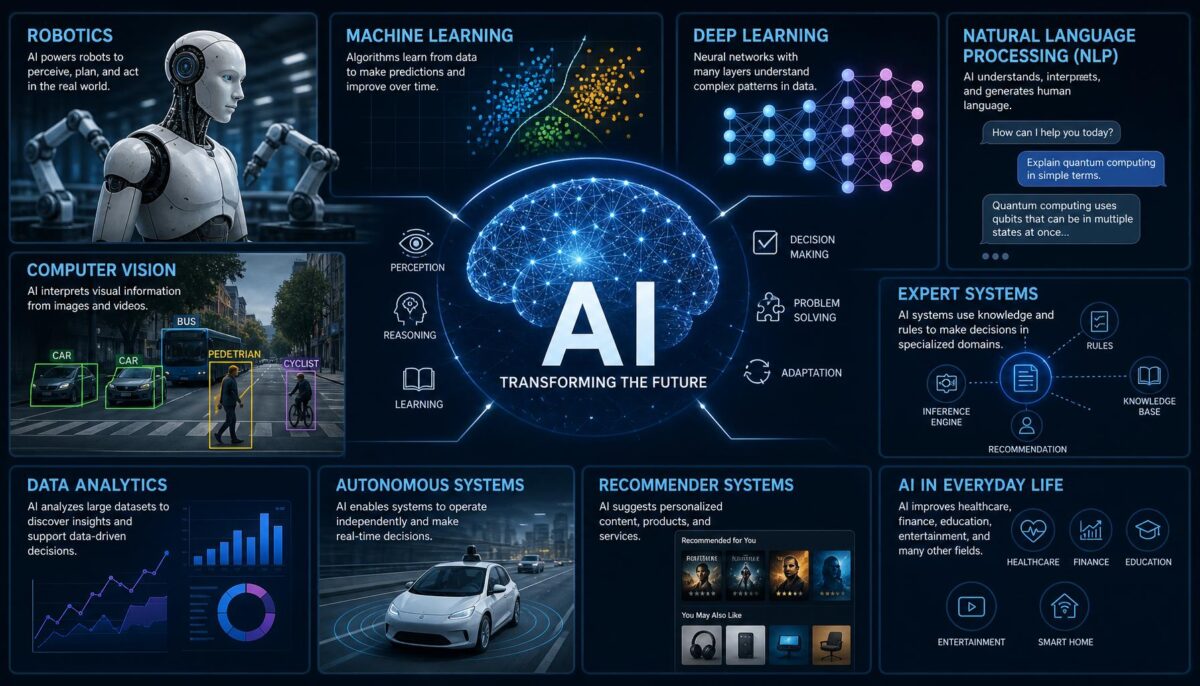
Artificial Intelligence or AI is a field of computer science that deals with the creation and development of machines that are capable of exhibiting human-like intelligence, learn from their experiences, understand information, make decisions, understand human languages, and perform tasks that normally require human intelligence.
AI can be broken down into two main types:
1. Narrow AI: This is artificial intelligence systems that are designed to do a narrow task such as voice recognition. For instance, Apple’s Siri and Amazon’s Alexa are examples of Narrow AI.
2. General AI: This is the type of AI that we generally associate with sci-fi movies. General AI refers to machines that are capable of performing any intellectual task that a human being can do.
Intricacies of AI:
1. Machine Learning: Machine Learning is a core part of AI. It involves teaching machines how to learn from data inputs and use that learning to make decisions or predictions.
2. Neural Networks: They try to simulate the workings of the human brain to help AI systems learn, understand and make decisions.
3. Natural Language Processing (NLP): This is the ability of an AI to understand, generate, and respond in human language. It’s what Siri, Alexa, and Google Assistant use to understand and respond to user commands.
4. Deep Learning: A subtype of machine learning where artificial neural networks are built in layers to create an “artificial brain” that can make decisions and learn from data.
5. Robotics: AI also involves building machines (robots) that can interact with the physical environment and perform specific tasks.
Overall, the objective of AI is to make machines smarter and capable of doing things that normally require human intelligence. To a layman, you could think of AI as a smart assistant that can understand your commands, learn from your actions, and perform tasks that make your life easier, from recommending a Netflix show based on what you’ve liked in the past, to self-driving cars that can navigate traffic on its own.